|
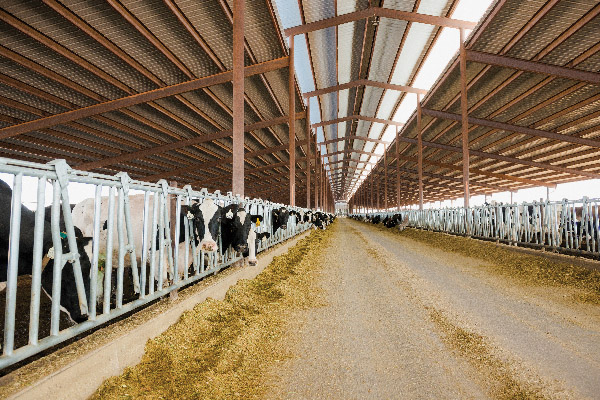
by a digital device that monitors and maintains
all house functions. When a problem arises,
the controller dials out to alert Stephen.
Also, Gary or Stephen can dial into the
system to monitor a specific house.
"There are 26 electrical motors in each
house and a huge number of microswitches,"
says Gary. "You have to make
sure that everything works."
Both Gary and Stephen are diligent about
maintaining the equipment.
"Once you get behind on maintenance,
you'll never catch up," Stephen says.
Respecting the Environment
In addition to using modern technology,
the Lirettes are committed to responsible
stewardship.
"We want to be good environmental stewards,"
Gary says. "We want to contribute to
the farming profession in addition to being
profitable." In line with this philosophy, the Lirettes
are using innovative ways to protect the
environment. The newest complex was
built out of a 40-acre timber tract, with
the houses situated on 18 acres in the
center, surrounded by a timber buffer on
all four sides.
"This was the first time I'd seen this done,"
says Marcel Vandenoord, vice president,
Louisiana Ag Credit's Arcadia branch.
The family also has been an active part
of the Louisiana State University Master
Farmer program, which helps farmers voluntarily comply with
environmental standards
for clearing up the state's
water bodies.
"I think most farmers
want to do the right
thing," Gary says. "This
program allows farmers
to |
understand their environment
and learn best management practices
to minimize their effects on the land."
Farmers in the state can obtain a "Master
Farmer" certification by successfully completing
the three-phase program, which
begins with classroom instruction covering
a wide range of topics. Once completed,
elite operations are recognized for using
best management practices and chosen
to be model farms to demonstrate these
practices. Finally, each operation must
work closely with the U.S. Department of
Agriculture's Natural Resources Conservation
Service to develop and implement a
conservation plan. In addition, the Lirettes
are currently participating in a study that measures the efficiency of buffer zones.
The water-collection system was set up in
the spring and for the next two years will
measure nutrient levels in water runoff at
35 feet and 100 feet into the buffer zone. In
this way, the LSU AgCenter will be able to
determine how buffer zones impact nutrient
levels from poultry litter applications.
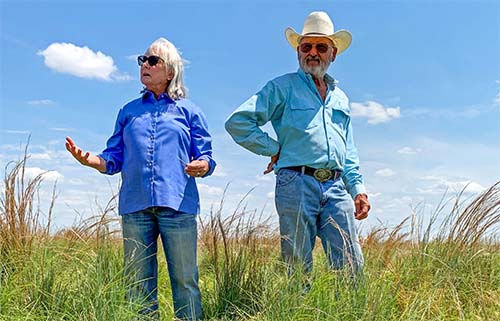
At the heart of the operation is the Lirettes'
deep passion for country living. Gary and
his wife of 38 years, Louise, enjoy this type
of life for raising their family. They have
six children, 20 grandchildren and one
grandchild on the way, who live throughout
the state. Gary is in business with two
of his sons in an engineering, manufacturing and service company.
He also runs a few head
of cattle and horses.
"It's a holiday when the
kids and grandkids come
to the farm," Gary says.
"We'll never move back
to the city."
- Staff
|