 Landscapes Magazine is an award-winning publication of the Texas Farm Credit District lending associations.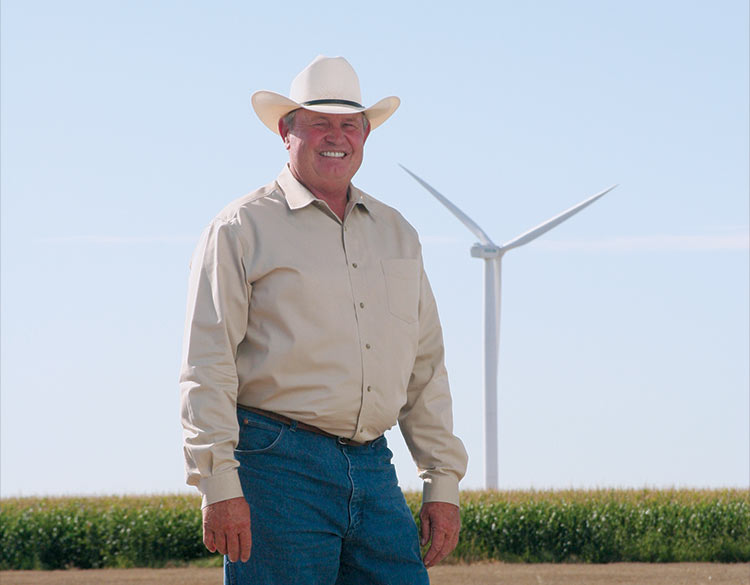
Photos by Sarah Harris
For visitors and residents alike, the wind is always a popular topic of discussion in the Texas Panhandle. The strong, blustery currents that sweep across the Great Plains have long been an enemy of the area's farmers and ranchers, but that relationship may be changing.
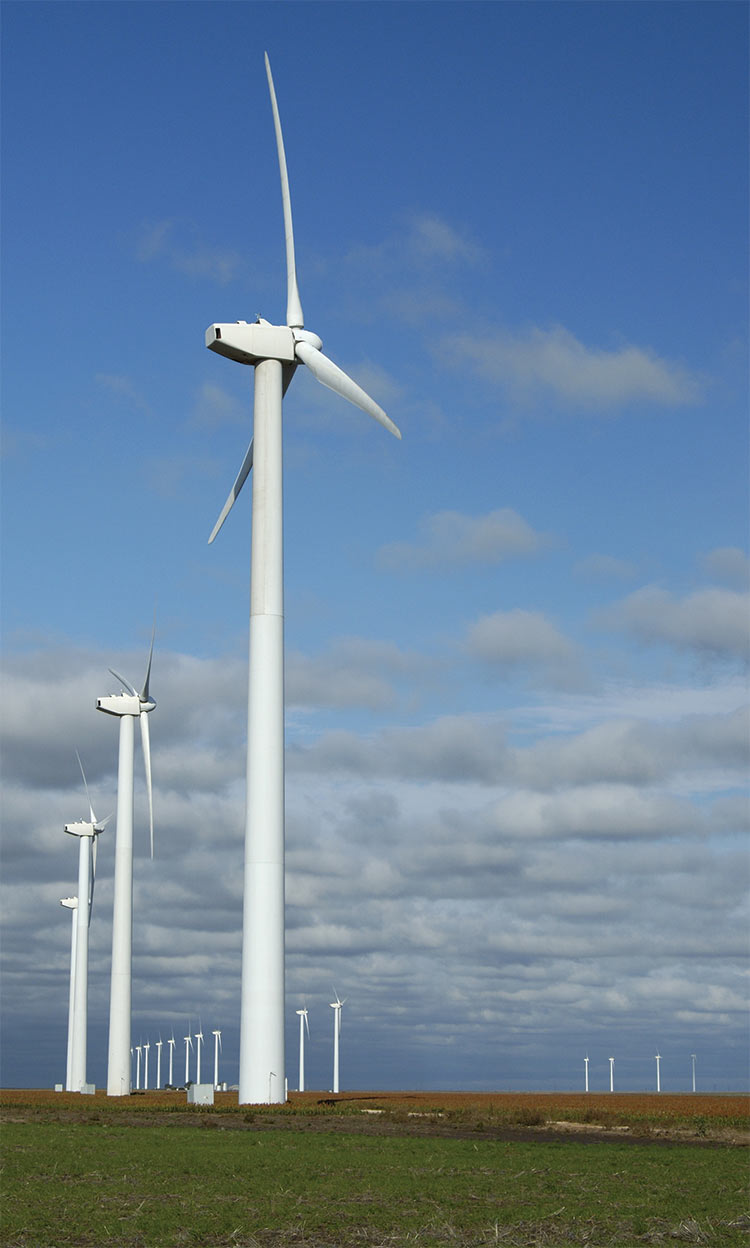
Over the past few years, wind turbines have been popping up on the landscape, dotting the vast, flat horizon where not much else was seen before. For many local landowners, like Great Plains Ag Credit Chairman Mike McLain, the turbines offer a welcome way to diversify their agricultural operations and finally make good use of their menace, the wind.
But it was totally by accident -- or luck -- that McLain ventured into wind ranching. In November 2002, he came upon a group of men inspecting an abandoned microwave tower on his ranch near Gruver, Texas. They were looking for a potential place to install windresearch equipment. "I told them they didn't need to do any research," McLain says jokingly. "I told them I know the wind will blow."
"I used to curse the wind, but now I wake up in the morning and say 'let 'er blow.'"
First Wind Farmer in His Area
McLain agreed to let the group install the equipment under one condition. "I wanted to be the first landowner they talked to if they decided to build wind turbines in the county," he says.
Wind Energy at a Glance
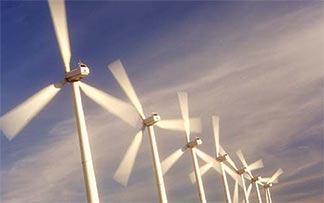
- Wind energy is the fastest growing energy source in the world. Globally, wind power generation more than quadrupled between 2000 and 2006.
- While Europe has led the way in developing wind power as an energy source, the United States has added more wind-power generating capacity in the past four years than any other country.
- The U.S. ranked third in cumulative capacity, with 12,634 megawatts (MW) of installed capacity as of June 30, 2007, the American Wind Energy Association (AWEA) reports.
- Wind energy accounts for 21 percent of total electricity used in Denmark, 9 percent in Spain, 7 percent in Germany and Portugal, and less than 1 percent in the United States.
- The U.S. ranks eighth in wind energy consumption.
- Most wind farms are located on privately owned rural land that is situated in high-wind areas. Although Alabama, Louisiana and Mississippi do not currently have substantial wind energy production, Texas and New Mexico rank in the top 10 producing states.
- Wind power production in Texas has quadrupled since 1999, and for the last two years, Texas has been the top wind producer in the United States, according to the AWEA, producing more than 3,000 wind-generated MW annually.
- Texas is home to four of the country's six largest wind farms, including the world's largest, Horse Hollow Wind Energy Center, located just outside Abilene. Horse Hollow's 421 turbines generate enough electricity to power 165,488 Texas homes per year.
- New Mexico ranks seventh in total wind capacity, generating nearly 500 MW from wind energy in 2007. The nation's eighth largest wind farm, the New Mexico Wind Energy Center, is located 20 miles northeast of Fort Sumner, N.M. It consists of 136 turbines that can produce enough electricity to power 94,000 New Mexico homes.
The research proved fruitful, and studies -- including wildlife impact studies, land surveys and Environmental Protection Agency research -- were conducted on McLain's property. In November 2006, construction began on McLain's wind farm. Financed by John Deere Wind Energy, the project entailed erecting 47 Suzlon turbines -- eight that generate 1.2 megawatts each and 39 that produce 2.2 megawatts apiece -- on 2,240 acres that McLain decided to devote to the wind farm, rather than put into full agricultural production. The turbines were built in an east-to-west direction to capture as much as possible of the Panhandle's wind stream, which generally blows from the southwest.
Energy Sent Out of State
The energy generated by McLain's turbines is sent to a collection facility a few miles away. From there, it can be sent to Southwestern Public Service/Xcel Energy customers in Colorado, Minnesota and New Mexico, who specify that they want to purchase wind energy. One megawatt of wind energy can generate electricity for 225 to 300 households.
The only drawback to the turbines, according to McLain, is that they are not a constant source of energy production. They need winds of at least 10 miles per hour to produce energy, and if the winds reach 50 miles per hour, they shut down.
"It's not easy for the power companies," McLain says. "There needs to be another energy supply when the wind is not blowing."
Wind Energy Complements Ag Operation
A farmer and rancher foremost, McLain says that the wind turbines complement his family's agricultural operation. He grew up farming and ranching in Gruver, and began his own operation in 1973. Today, alongside his son and son-in-law, he farms corn, wheat and milo in several Texas and Oklahoma Panhandle counties, and is a partner in MC Cattle, his family's stocker and fed-cattle operation.
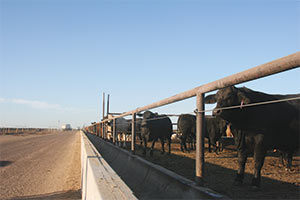
"The turbines have been very compatible with farming and ranching," he says. "It's been a little difficult with our irrigated land, but we have made it work. As for the cattle, they don't seem to mind the turbines much because they walk right underneath them."
Since 1999, McLain has been one of six investors in USA Feedyard, a 43,000-head-capacity yard located just south of Gruver. The feedyard is also a Great Plains Ag Credit customer.
A Longtime Farm Credit Leader
In addition to business endeavors, McLain has dedicated himself to Great Plains Ag Credit. A stockholder since 1977, he was approached in 1985 to serve on the board and agreed. He has served as the board chairman since 2005.
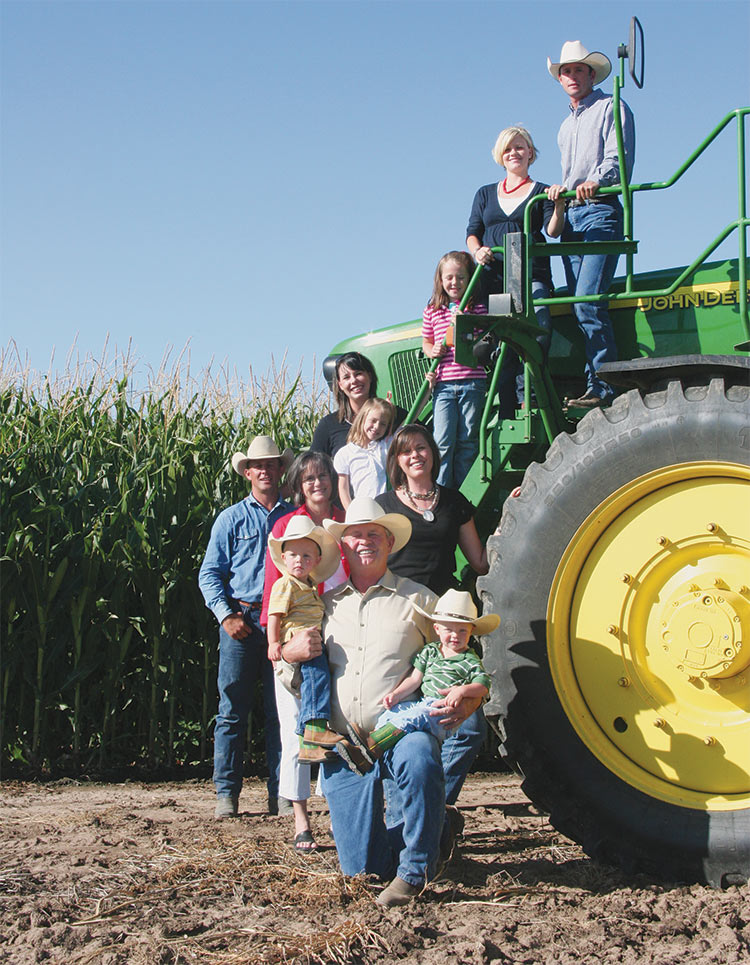
MC Cattle is a six-way family partnership between McLain, his wife, Diane, and two of their children and their spouses.
"I felt like it was the best place for my family to bank and I wanted to make sure that it continued to be the best place to borrow for agriculture," he says. "I'm a believer that it still is."
Eddie York, Great Plains Ag Credit senior vice president of credit, says that McLain's operation is the "ideal family farming business," and that he is glad that the association can benefit from McLain's business savvy.
"Great Plains Ag Credit is fortunate to have someone like Mike, who has such a strong knowledge of the business and who is open-minded," York says.
McLain's service to Farm Credit extends beyond Great Plains Ag Credit. He serves on the Stockholders' Advisory Committee for the Tenth Farm Credit District, which includes 20 Farm Credit cooperatives in Alabama, Louisiana, Mississippi, New Mexico and Texas.
"Farm Credit has always helped me know what my business is and what it truly needed at the time. They discouraged me at the right times," he says. "Farm Credit will not get a young farmer in trouble."
Calling a Truce
Just as he is a true advocate for Farm Credit, McLain has become an ally for the state's wind energy industry. Recently, wind turbines in Texas have come under attack by groups and individuals claiming that they are noisy and unattractive neighbors, but McLain says that he has had no complaints.
"I've actually had people tell me that they like looking at them because they're a break in the monotony of the scenery," he says.
Thanks to the wind turbines, most area residents and landowners, including McLain, are changing their opinions on the wind.
"I used to curse the wind, but now I wake up in the morning and say 'let 'er blow.'"
-Staff